Travel Budget Breakdown: How to Allocate Your Vacation Money Wisely
One of the biggest mistakes travelers make is not knowing where their money goes before and during a trip. Without a clear travel budget breakdown, it is easy to overspend on flights and find yourself eating instant noodles for the last three days of your vacation. A well-structured budget ensures every dollar has a purpose, so you can enjoy your trip without financial anxiety.
This guide walks you through the ideal way to allocate your vacation budget across every major expense category. Whether you are planning a domestic road trip or an international getaway, these percentages and strategies will keep your spending on track.
Why You Need a Travel Budget Breakdown
A travel budget is more than just a total number. It is a plan that divides your money into specific categories so you can make informed decisions. Without this structure, most travelers end up front-loading their spending on flights and hotels and then scrambling to cover food, activities, and transportation once they arrive.
By breaking your budget into percentages, you create a framework that works regardless of whether your total budget is $1,000 or $10,000. The proportions stay the same, and your trip remains balanced and enjoyable.
The Ideal Travel Budget Allocation
While every trip is different, the following allocation works as a solid starting point for most vacations. You can adjust these percentages based on your travel style and destination, but they give you a proven framework to build from.
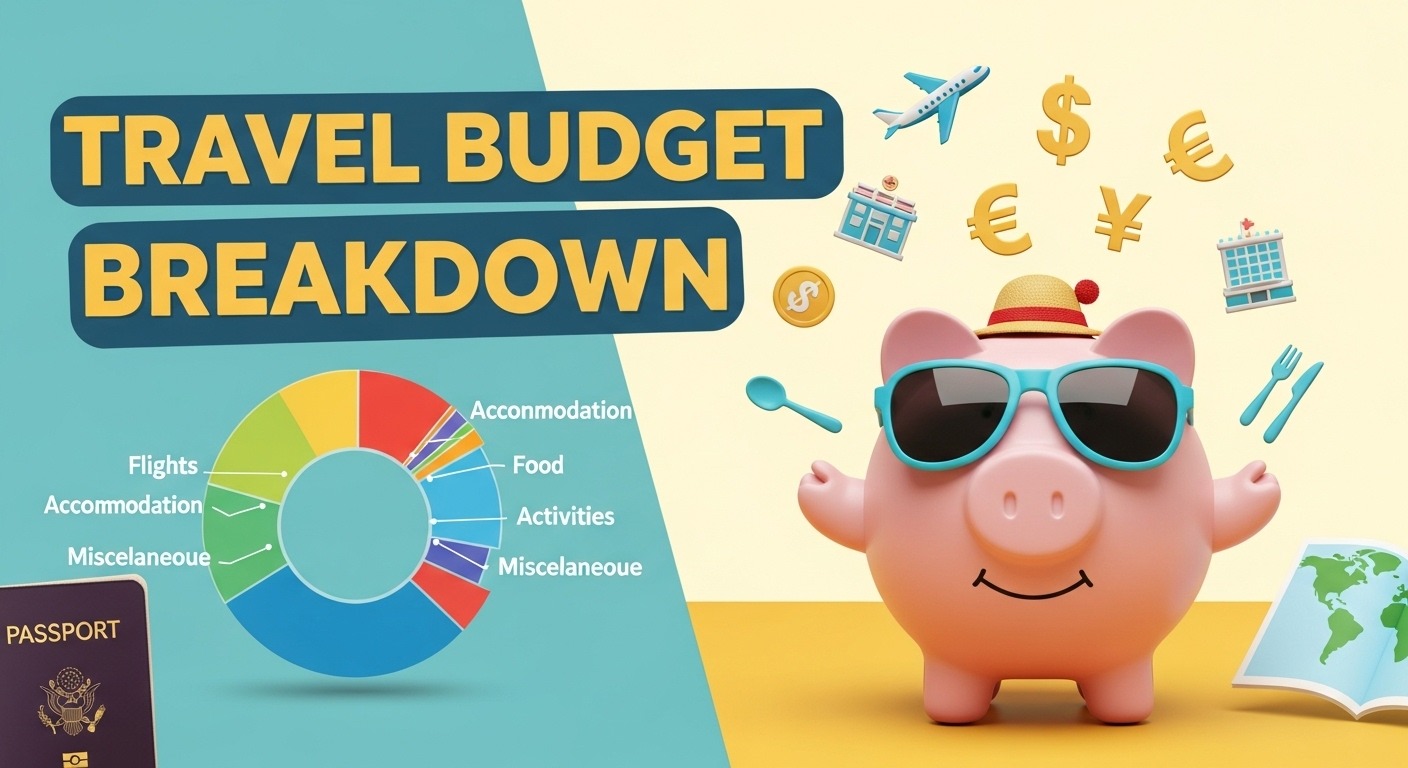
| Expense Category | Recommended % | Example ($3,000 Budget) |
|---|---|---|
| Transportation (Flights/Gas) | 30-35% | $900 - $1,050 |
| Accommodation | 25-30% | $750 - $900 |
| Food & Dining | 15-20% | $450 - $600 |
| Activities & Sightseeing | 10-15% | $300 - $450 |
| Local Transportation | 5-10% | $150 - $300 |
| Emergency & Miscellaneous | 5-10% | $150 - $300 |
Transportation: Your Biggest Expense (30-35%)
Getting to your destination is usually the most expensive part of any trip. For domestic flights, you might spend $200 to $500 round trip, while international flights can range from $500 to $1,500 or more depending on distance and timing.
To keep transportation costs within your allocated percentage, book flights during sales, use airline miles or credit card points, and consider alternative airports near your destination. For road trips, factor in gas costs, tolls, and any vehicle maintenance needed before departure.
Accommodation: Where Quality Meets Value (25-30%)
Your accommodation choice sets the tone for your entire trip, so it is worth getting this right. Allocating 25 to 30 percent of your budget gives you enough room to find comfortable lodging without overspending.
Budget travelers can stretch this allocation by choosing vacation rentals over hotels, staying slightly outside city centers, or booking accommodations with kitchen facilities to save on dining costs. For longer trips, weekly rental discounts can reduce your nightly rate by 20 to 40 percent.
Food and Dining: Fuel Your Adventures (15-20%)
Food is one of the most enjoyable parts of traveling, and it deserves a healthy portion of your budget. Allocating 15 to 20 percent allows you to enjoy local cuisine without constantly worrying about every dollar.
The smartest food strategy is the 2-1 rule: prepare or buy two simple meals yourself (breakfast and lunch) and treat yourself to one nice restaurant dinner each day. This approach lets you experience the local food scene while keeping overall costs manageable.
Activities and Sightseeing: Making Memories (10-15%)
This is the category that many travelers either overspend on or completely neglect. Setting aside 10 to 15 percent for activities ensures you can enjoy guided tours, museum entries, adventure sports, or show tickets without guilt.
Research activity costs before your trip and prioritize the experiences that matter most to you. Balance paid attractions with free activities like hiking, exploring neighborhoods, visiting public markets, or attending local festivals. Many cities also offer tourist passes that bundle multiple attractions at a discounted rate.
Local Transportation: Getting Around (5-10%)
Once you arrive at your destination, you still need to get around. Taxis, ride-shares, public transit, rental cars, and even bicycle rentals all fall into this category. Allocating 5 to 10 percent keeps your local transportation costs in check.
Public transportation is almost always the cheapest option, and many tourist-friendly cities offer excellent metro and bus systems. If you plan to use transit frequently, look for multi-day passes that offer unlimited rides at a flat rate.
Emergency Fund: Your Safety Net (5-10%)
No matter how carefully you plan, unexpected expenses happen. A delayed flight might require an extra night in a hotel. A sudden rainstorm might push you into a museum you had not planned to visit. Your phone charger might break, or you might need an urgent pharmacy run.
Setting aside 5 to 10 percent as a buffer gives you peace of mind and financial flexibility. If you do not use it, congratulations — you came home under budget, and that money rolls into your next trip fund.
How to Adjust Your Budget for Different Trip Types
Backpacking and Budget Travel
Shift more money toward activities and food, and reduce accommodation costs by staying in hostels or budget guesthouses. Transportation may also be cheaper if you are traveling overland by bus or train rather than flying between destinations.
Luxury Travel
Increase the accommodation and dining percentages, as these are the categories where premium experiences cost the most. A luxury hotel might consume 40 percent of your total budget, which means you need to adjust other categories downward accordingly.
Family Vacations
Families should allocate more to accommodation (a larger rental or connected hotel rooms) and activities (theme parks, kid-friendly tours). Food costs also increase with more mouths to feed, so consider adding 5 percent to the dining category.
Tools to Track Your Travel Budget
Several free and affordable apps make tracking your travel expenses effortless. Look for apps that let you set category budgets, log expenses in real time, handle multiple currencies, and generate spending reports. Keeping a running tally during your trip is the single most effective way to stay within your planned allocation.
You can also use a simple spreadsheet before your trip to map out expected costs and compare them against actual spending as you go. The key is choosing a method you will actually use consistently.
Start Budgeting for Your Next Trip Today
A solid travel budget breakdown transforms your trip planning from stressful guesswork into a confident, organized process. By allocating your money wisely across transportation, accommodation, food, activities, local transit, and an emergency fund, you ensure that every part of your vacation gets the attention it deserves.
Remember, the best budget is the one you actually follow. Start with the percentages in this guide, customize them to fit your travel style, and enjoy a financially stress-free vacation.
Frequently Asked Questions
How much should a couple budget for a week-long vacation?
A comfortable budget for a domestic week-long vacation for two ranges from $3,000 to $5,000. This covers mid-range accommodation, dining out, and several paid activities.
What is the 50-30-20 rule for travel budgeting?
Some travelers adapt the popular 50-30-20 rule: spend 50 percent on essentials (flights and accommodation), 30 percent on experiences (food, activities, local transit), and keep 20 percent as savings or an emergency buffer.
Should I budget more for international travel?
Not necessarily. Some international destinations are cheaper than domestic travel. The budget breakdown percentages work regardless of destination — what changes is the total dollar amount you need.